NINE MONTHS AFTER THE EARTHQUAKE: Haitians Are Still Waiting on Santa Claus

Regardless the countless openings made available to us by the peoples that welcome us as guests in their home countries, we in the Diaspora cannot be living in our misperceived comfort zone of Chinese food eating and Kool Aid drinking to think that Haiti can do without us. Somehow, we need to find our political voice and activism to get involved in the political, social and economic debates going on inside the country. We, not the international community, are the savior of Haiti. No one can love and care about the country we call ours more than we do.

After the earthquake of January the 12th which basically put the country on its knees, it is more pressing today than it has ever been to get united around one agenda so we could do for ourselves what we have been desperately waiting for decades on others to do for us. We cannot and will not accomplish anything if we do not put aside all the bickerings and wranglings that are keeping us apart, thus preventing us from coming together as one people to overcome the challenges and solve our problems.  

The unity movement we are propagating needs to have three legs –social, political and economic. We already have the economic upper hand. We have been contributing about 2 billion dollars a year to the country’s economy. This is no small contribution; it cannot and must not be overlooked.

In any country, the economic power is the engine that tilts the political balance in one way or the other. If you do not represent anything economically speaking, do not expect to weigh anything on the political scale. Your economic standing is the drive that determines your political strength to influence the politics of things. Now that we know we have the economic upper hand, how can we capitalize on it?

We need to create and develop liaison organizations and establish partnerships with the political powerhouses on the ground. Politics is all about cutting deals and making compromises to get what you opt for, which in the world of politics we call LOBBYING. This is a world where you do not get anything with nothing.

If we organize ourselves in a systematic way, playing the game of politics on the ground in Haiti to get, for instance, the dual citizenship bill introduced, voted on in both chambers of Congress, and signed into law by the president of the country will be a piece of cake.

That should not be a matter of political struggle, not when we are all Haitians who just happen to be living outside the country. We do not need to be subject to a citizenship test to prove that we are Haitian. Being Haitian is not just a matter of nationality; it is also a matter of heart. Your home is where your heart is. And for most of us, our hearts are in Haiti.  

Way before the earthquake, the country was severely hurting with a brain drain phenomenon –skilled people leaving the country and migrating to foreign lands. The situation has gotten amplified as a result of the disaster. Now very few people with skills are left inside the country, explaining the reason why we are relying on these NGOs to take care of the country’s business. As I’ve said many times, the economic brain (skills/savoir faire) and blood (money) of the country are in the Diaspora, not inside the country. So any politics of isolation of the Diaspora is doing nothing but further alienating the country.

We have enough manpower and expertise in our ranks to rebuild our earthquake-stricken and poverty-stricken nation. Quite frankly, I refuse being entertained with the idea that a foreign country or dignitary has the solution to our problems; I reject any proposal that wants to make believe that the international community is here to rescue the country from the abyss it finds itself today. Believing in such foolishness is to believe in Santa Claus. Nine months after the quake, we are still sitting on our butts allowing ourselves being played by an international community that does not really give a damn about us.

It is time that we open our nostrils and start smelling the coffee. If these guys were going to do for us, they would have done so long ago, especially when some of them were and are still in control of the leadership of the world. In fact, some of them have their prints in the economic and foreign policies that got us where we are in the first place.

It is up to us Haitians to do for ourselves what we want and how we want it done. The rescue of Haiti lies in the hands of the Haitian people. Bill Clinton, however compassionate and sympathetic he may be with respect to the Haitian cause and struggle, cannot do anything for Haiti if we Haitians do not come through to set the tone and tell him what we want and how we want it done.

Finally, we in the Diaspora have this date with history which we need to show up for. We cannot stand her up this time. We need to come together as one to build our nation physically and psychologically like the Jews did to give birth to their independent nation of Israel six decades ago. We –dark-skinned and light-skinned Haitians, peasants and professionals, rich and poor, young and not so young, men and women across all social, religious, economic and political spectrums –need to converge our efforts with our brothers and sisters on the mainland to realize a social and economic 1804. We can make it happen. This is the moment for our generation to write its chapters in Haitian history. We are no different than our forefathers who brought amazement with their heroic spirits to the minds of the skeptics with their political movement that culminated in the independence of our great nation. So let’s not let this date with history bypass us.

KONPA ARTISTS ON THE POLITICAL BANDWAGON

Choubou: Tabou Combo's lead vocalist, a Michel Martelly endorser

Political endorsement is something very serious; it ought not to be taken lightly. So far, we have witnessed quite an array of Konpa artists coming out at an unprecedented rate to publicly endorse candidates in this presidential election cycle; in my humble opinion, I think that is encouraging. I am not trying to scare anybody, but I am just hoping that you guys know that political endorsements, at times, come with backlashes and consequences -whether directly or indirectly.    

To the rest of you Konpa personalities, those of you who are still standing on the sidelines and have yet to jump on the bandwagon of presidential endorsement, I have four simple words for you: DO NOT DO IT.

Haitian politics is a very tricky and complicated field. You are dealing with an electorate not democratically cultured enough to accept the fact that you can have a say in the political process and have your political position respected. They all aspire to democracy, but refuse to understand that it cannot be possible without the creed of tolerance.  

Yes, indeed, you have your rights as citizens of Haiti to publicly endorse anybody you want in this race just like your fans have their rights to not support you anymore because your political endorsements do/did not reflect theirs.

Some people take politics very personal. Remember, you need the support of your fans to stay in business. Your fans are all you have. Once they turn their backs on you, you are game; your career is over. So be very careful with that political endorsement thing. If you cannot sustain the heat, keep yourself away from the furnace. Otherwise, you might get burnt.

Of course, Fanfan Ti Bot, Choubou, Cubano, Douby, etc… they all can come out publicly and endorse candidates; they do not have anything to lose. With all due respect to them and what they represent in the world of Konpa music, as far as this new generation of fan base is concerned, these guys don’t really matter in this business anymore. If Konpa was a structured and lucrative business, they should have not been in circulation anymore; they should have gone into retirement long ago. But you, young artists coming up, have a lot to lose. I am going to repeat the same thing I said to you earlier, and that is you need the support of your fans to stay alive in this entertainment business.

My golden advice to you all is this: DO NOT MINGLE; LET THE PROCESS RUN ITS COURSE. You are not ordinary citizens; you are people with a platform. Therefore, do not put yourselves out there for political expediency.

That’s all I wanted to communicate to you all. Hopefully, you will find my advice sound and relevant. Well, I am a nobody, why should you listen to me?

DEFORESTATION WON’T STOP KILLING HAITIANS


Aerial photo taken from above the border


Definition


Deforestation refers to the total logging and/or burning of forest space -whether this destruction is due to cattle ranching, plantation agriculture or real estate development. It is also the permanent conversion of forest cover to non-forest purposes. There is a big difference between deforestation and forest degradation. While forest degradation may change the ecology of certain forest aspects, it does not, however, destroy all forest cover, which is what deforestation does. So deforestation is much more serious than forest degradation.

Historical aspect of the Haitian deforestation

The majority of us Haitians are descendants of slaves brought from Africa in the 1600s by French colonizers, who then destroyed tens of thousands of acres of forest for the purpose of cultivating the sugar cane that placed Haiti in the lead of the world’s sugar producers. Hence, more forests were destroyed to fuel the sugar mills and be shipped to Europe to make furniture of mahogany and dyes or colorant from campeachy.

After the revolt of the slaves that culminated in the defeat of the Napoleon Army and gave birth to the nation of Haiti, the world’s first Black republic in 1804, great plantations were partitioned among the slaves. Under the inheritance law that governed the then French society, land is distributed among a man’s heirs. A demographic explosion of the Haitian society was going to compromise the applicability of that inheritance law. “One of the fastest growing populations in the world — Haitian women average five births each — has reduced the average holding to little more than a half acre. That is not enough to support a family of seven even in a good rainy season” (Braken, 2004).

The economics of deforestation in Haiti

Because the land could no longer satisfy the farmers’ daily obligations, they found themselves under intense economic pressures for income -simply to take care of their family. So unbearable such a reality has become for them, they had to chop trees to make and sell charcoal.

In a report filed in September 23, 2004 by Amy Braken of the Associated Press, who quoted Mr. Victor, an agronomist, the deforestation in Haiti has moved from bad to worse. According to that same report, from 1950 to 2004, the 25 percent of Haiti’s 10,700 square miles that was covered with forest has reduced to only 1.4 percent.

According to David Adams, a former USAID director in Haiti, over the past 20 years, the U.S. Agency for International Development has planted 60 million trees in Haiti, but the poor chop down 10 million to 20 million trees each year.

Consequences

The rapid destruction of forest cover has serious economic, ecological and ethical consequences on the lives of the Haitian people. Millions of people in Haiti as well as other poor countries around the globe face permanent poverty as a result of the deforestation reality. In a case study titled Deforestation in Haiti, such a devastating reality got Kristen Picariello to say, “If one were to fly over the border between Haiti and the Dominican Republic, the border appears like it was drawn by an ‘acetylene torch’ owing to massive deforestation in Haiti.”

We cannot address the deforestation reality in Haiti without placing under the microscope the most recent tragedy of hurricane Janne. Dan Bjarnason, in an article entitled Deforestation in Haiti published in the CBC News Online of October 01, 2004, stated that Janne had a big toll on Haiti because the country’s natural defenses were extinct. He went further to say that Janne was yet to become “a full-blown hurricane when it hit Haiti. At that point, it was only a tropical storm. Still its impact was enormous.”

Comparing Haiti to its next door neighbor, the Dominican Republic, one can see a heartbreaking reality. The Dominican Republic is lush, green, and fertile. On the same island, neighboring Haiti is mostly mountainous and virtually denuded of trees. That’s the troubling difference that exists between the ecological profile of the two countries sharing the same island.

Haiti’s forests then were destroyed to fuel colonial sugar mills; now its people, impoverished by a thread of gangster governments, are left with no other alternative but to destroy what is left of their trees just to survive.

“There are simply no jobs in Haiti, and for many people, cutting down and selling trees is a form of income, which they would otherwise not have,” says Daniel Erikson of Inter-American Dialogue. “Then the other side of it is 70 to 80 percent of the Haitian people have no access to modern electricity, so they need wood-based charcoal to cook, to provide fuel for heat, for light.”

One does not need a Ph.D in environmental economics to understand the reason why tropical storms are a calamity in Haiti. Ken MacDonald of the University of Toronto did a tremendous job at explaining the situation in very basic terms. He said that when there are no trees to break and absorb the fall of raindrops in a storm, they (those raindrops) crushed into the ground like bullets.  Because the soil is not strong enough to sustain and absorb the water, not having any place to escape to, it accumulates over land in a very short period of time -a situation that gets even worse because of the slope that covers most of Haiti.

The politics behind the issue

After the floods of May of 2004 that killed hundreds of people and left thousands without a home, interim Prime Minister Gerard Latortue said, “The root of the problem is that we have to go and reforest the hills and until we do that, every two, three, four years after some heavy rain, the same thing could happen again.” That is very true, but what did he do to solve the problem? Absolutely nothing!!! The problem with our politicians is that they are good talkers, not so good actors. What he said in 2004, we knew it then and still do today. He said we have to go on and reforest the hills, how is it going to get done? As the person in charge of the country then, that’s what he should have been talking about, not telling us something we already know.

It is not that we don’t have environmental laws to remedy to that chaotic reality of deforestation that the country is living at this present moment. According to that same gentleman Erickson quoted earlier, “Haiti actually has some environmental laws that are quite reasonable and quite good, but there’s absolutely no enforcement, and in most of the country, you have no functioning state whatsoever.”

Projecting toward the future

The future looks very gloomy for us in our battle against deforestation. It has been forecast that as the population mushrooms or swells in the next 20 years, twice as many people will be going after the fewer trees we have left. And Jean-Andre Victor, one of Haiti’s top ecologists, predicted that if nothing is done to take care of the deforestation problem, the situation will continue to deteriorate and other catastrophes are foreseeable. So inaction on the part of the government is not warranted; it is not going to efface the problem. If nothing gets done with a sense of urgency, the situation will get worse and more people’s lives will be exposed to greater and unthinkable natural calamities.

We need a comprehensive reforestation strategy which will take into consideration our geographical location, the people’s socioeconomic reality, the available and alternative sources of energy, the psycho-sociological aspect of the issue and all that. So this is a very complex issue whose scope must not be underestimated.

A comprehensive reforestation strategy will not come to light by spontaneous generation. We do need good and proactive leadership which only active and responsible politics can foster. That’s why it is imperative that we stop falling for political talkers. It is time to put in office political actors with a clear understanding of the people’s problems and a clear vision for the future to lead the country.

Any development plan for Haiti must incorporate the country’s ecological health. There can never be social and economic developments if this issue of deforestation is not properly addressed. This issue is so crucial that it is a make or break issue for any prospective development plan for Haiti. So, yes, deforestation is Haiti’s number one serial killer.

http://www.american.edu/TED/ice/haitidef.htm

http://www.waterconserve.info/shared/reader/welcome.aspx?Linkid=35159

Source: Copyright 2004, Associated Press

Date: September 23, 2004

Byline: AMY BRACKEN, Associated Press Writer

INDEPTH: HAITI

Deforestation in Haiti

CBC News Online | October 1, 2004

Reporter: Dan Bjarnason

RELIGION: THE ADDICTIVE DRUG TO BE MADE ILLEGAL

Before I get deeper into this, I think it would make sense to define for your edification the “illegal drug” concept. Drugs are often called “illegal drugs” but in reality what is illegal about them is not the fact that they are being consumed but rather because of their unlicensed production, distribution, and possession. On what basis would a drug be classified as illegal?

The government would label a drug illegal because its use/abuse tends to lead to health problems, social problems, morbidity, injuries, unprotected sex, violence, deaths, motor vehicle accidents, homicides, suicides, mortality, physical dependence or psychological addiction.

In the case of religion, I think we would be better off without. Religion has caused more tribulations than good to humanity. It has brought us social problems, violence, deaths, homicides, physical dependence and/or psychological addiction.

Aren’t we told that there is one God and one Holy Spirit to inspire and teach us the way? If that is so, why do we have around the globe so many religions? Not only that, why do we have so many religion-driven fights over influence, supremacy and domination? There can’t be anything holy about all these turbulences religion has caused.

Religion divides us more than it unites us. All the great wars/conflicts our world has known stemmed from religion.

  1. Wars of Religion –a series of wars that erupted in Europe during the sixteenth and seventh centuries, as a result of the onset of the Protestant Reformation.
  2. The French Wars of Religion (1562–98) –this name is attributed to a period of civil disturbances and military operations primarily between French Catholics and Protestants. The wars also involved the aristocratic houses of France –the House of Bourdon and House of Guise. These wars ended with the issuing of the Edict of Nantes by Henry IV of France, which granted to the Calvinists a certain degree of religious tolerance.
  3. The Crusades –a series of religious-driven military campaigns waged by much of European Latin Christians against Muslim expansionism, over a period of nearly 200 years (between 1095 and 1291). The intent of these crusades was to regain control of Jerusalem and the Holy Land from Muslim rule.
  4. Jihad –an Arabic term that means “struggle.” We are all aware of how this concept has been used by Islamic extremists to get the kind of attention they are looking for.

Religion can be very addictive. In Haiti, my homeland, for instance, we have more religious conglomerates than hospitals/healthcare centers. We are amongst the most religious people on earth, yet amongst the most underdeveloped and divided. In our case, as a nation, religion has not helped a notch.

Most Haitian religious crazies are walking the earth with their spirits and souls in a perceived holy world yet to come. These people are completely detached from the real world. They would not engage in the politics of things in the country, though they are greatly impacted by it. They would not work and even go to school to get an education because they believe that Jesus did not go to school, nor did he have to work to sustain himself and his family. For them, going to school to get an education and working to contribute to the development of the economy are all against the word of God. They view themselves as celestial citizens whose country is in heaven; they are only in transit in this world. Therefore, they don’t have anything to do with what is happening in the country, nor do they have to do with the reality of life they are living. In other words, they are in this world, not of this world. How ridiculous that is!!!

Before I put an end to this, I want to make a serious distinction. I believe there is a big difference between being religious and being spiritual. The difference is simple -being religious is for dummies, whereas being spiritual is for intelligent people. See how simple that is?

In conclusion, for all the pains and sufferings religion has brought us, it should be classified as illegal drug. Why it is not being categorized as such is beyond my pay grade. Some people would tell you, and I tend to agree with them, that the reason why it is not classified as illegal drug is because it is good politics, and politics rules the world.

MADIVIN & THE MEANNESS OF OUR CREOLE

Kissing lesbians

The most popular Creole word there is to refer to a lesbian is “madivin.” It is a pejorative or derogative term to call someone. But in reality, if the etymologists are relying on the phonetic of the word “madivin,” they could deduct that it is from the French words “ma divine” or the English words “my divine,” meaning something holy and sacred. The question I have been asking is this: how could a holy and divinely inspired word such as this get to have a negative connotation in Creole?

WYCLEF: A GOLDEN BULLET NOT TO BE WASTED

Some people could say, and rightly so, that I was too harsh on Wyclef when he had declared his candidacy for the presidency in Haiti. Yes, I was, and I had my personal reason for that. Most of us, and possibly including Wyclef, knew that he was not quite ready to lead the country at this very unique and unprecedented socio-political juncture in the country’s history. In spite of that, we had the same people -who were using Aristide as a political card for their own selfish political agendas only to turn their backs on him right in the middle of the raging sea, when the game got tough -on the forefront catapulting Wyclef again as a political card. I and many others said not this time.

Wyclef is a VALUABLE ammunition which we cannot afford seeing wasted. I was fiercely opposing the idea of having him then running for the presidency. In a sense, it was good sport for him to have tested the waters to have a sense of what he needs to prepare himself for the job. I had been writing extensively on the issue, and thank God it seems as though he has been listening, which is a great thing.

Wyclef has proven to us that he is a fighter, and he does not take defeat lightly. As a fighter on the battlefield, that’s what you do -you assess your defeats to find the causes, correct them, and engage the enemy again with a winning state of mind.

After his defeat by the PREVAL Provisory Electoral Council (PPEC), I wrote to advise him to start his campaign for 2015 the day of. That’s what you do as a politician who believes in a dream to transform the face of your country and the situation of your constituents. So Wyclef started his campaign for 2015 the day he got rejected by the PPEC.

In this election cycle, Wyclef was facing two uphill battles –the legal battle and the perception battle. So he is working on making sure that in 2015, if he will have to endure battles, they are not the ones he just got defeated in.

  1. He lost the legal battle because he could not prove that he was legally residing in the country for five consecutive years following the last presidential election as stated in the Constitution of the land. This is an easy fix. All he has to do is to be in compliance with the law by maintaining his residency in Haiti. He needs to get his lawyer’s counsel on how to go by doing that.
  2. We all know that in politics, whether you want to admit it or not, perception is reality. So on the perception front, he was being hammered left and right by the people who did not think he was educated enough, who did not think he met the intellectual profile of someone worthy to be considered as president. This could be a little toughy, for it is not really easy to change people’s perceptions of you. But he is working on that. The last report I have come in contact with confirmed that he is looking forward to attending Brown University, one of the best institutions of higher learning in the United States. On Tuesday, October 5, 2010, he twitted:   “I Had a great day Yesterday [at] BRown University and look forward to being a Great student and learn as much as I can to take back home.”  
  3. When he was complaining on Facebook about nothing being done to remove the rubbles after nine months of the earthquake, in my blog on Facebook, I wrote “Wyclef: Let Me Holler at You” and slammed him (http://www.facebook.com/notes.php?id=907295022&notes_tab=app_2347471856#!/note.php?note_id=441370712272). My argument was that as a leader, when you see something needs to be done, and you have the means to mobilize and motivate the people and get them to make it happen, you act on it; you don’t complain about things not being done. He is doing exactly that, according to Le Nouvelliste of Tuesday, October 05, 2010 (http://www.lenouvelliste.com/article.php?PubID=1&ArticleID=84221&PubDate=2010-10-05). He has been very active with his organization Yele creating jobs and giving his people on the ground a chance to live better days in a society where desperateness and hopelessness are sapping the inner lives of the people.    

The therapeutic way to cure one’s fear is to have him/her face it, not running away from it. I remember vividly just like it was yesterday that when I was a little boy growing up in Gonaives, Haiti, I was so afraid of “lamayot” that one day I came across one and literally defecated on me. My mother, who found out about the accident, felt embarrassed and decided to do something about it. One Sunday afternoon, she, who did not have any clinical psychology experience to know what she was doing, brought the “lamayot” in the house and had me face, touch and talk to him. And that was the end of my fear of “lamayots” until today. I say all this to say one thing: I want Wyclef to be back PREPARED in 2015 to face and overcome the challenge.

Wyclef is a golden bullet my generation has in its political arsenal which we cannot afford to see going into waste at this early stage in his political career. I do not know what the future has in the bank for him, but I want you to keep eyes on him. He will be back roaring stronger and louder than ever before.

JIM DEMINT: FORNICATING WOMEN & GAYS BE BANNED FROM TEACHING IN PUBLIC SHOOLS

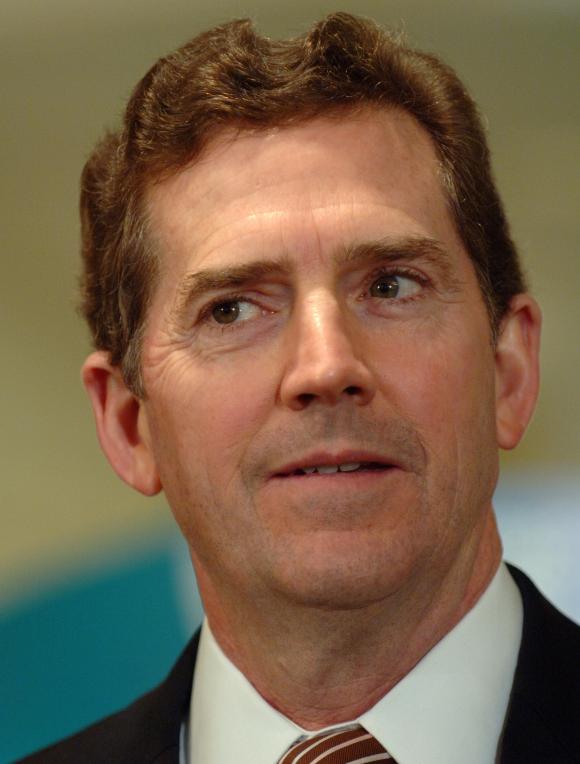
Jim Demint: Republican Senator of South Carolina

When you hear me taking some very strong and bold stands against these Conservative Republicans, I am sure some of you may be wondering why. Please do not assume a second that I am crazy. I pretty much have my own personal and ideological reason.

My fight against my Conservative Republican friends is purely ideological, nothing really personal. I believe they are great people who deserve to be loved and respected. However, I strongly believe they are dead and flat wrong on many issues, especially those having to do with abortion, gay rights, same-sex marriages, the DADT policy addressing the issue of gays and lesbians serving in the military and the list goes on and on and on and on. So today, we are going to zero on a very serious and specific issue -the issue of education and the social test teachers must be subject to in order for them to be allowed to teach kids in America.

 I want you to read this report filed in the Spartanburg Herald-Journal of South Carolina of Sunday, October 03, 2010 reporting about Senator Jim Demint’s plan to socially-engineer public education in this country. Before I get you to read the report, I want you to know that Republican Senator Jim Demint of South Carolina is the godfather of the Tea Party movement.  

The Spartanburg Herald-Journal reported: “Demint said if someone is openly homosexual, they shouldn’t be teaching in the classroom and he holds the same position on an unmarried woman who’s sleeping with her boyfriend –she shouldn’t be in the classroom.”

If that man and the rest of his Tea Party gang have their ways, my kids and yours will be indoctrinated with bogus ideologies to hate women, gays, lesbians, and basically American ideas.

According to Republican Senator Jim Demint of South Carolina, if you are gay or lesbian, you have no right to be in the classroom teaching American kids, and the same goes for you unmarried woman sleeping with your boyfriend. Jim Demint wants you to get out of the classroom; you should be out there doing other things, not teaching American kids.

Now, folks, as a Black man in this country, as someone whose people had been discriminated against for centuries solely because we look different than most (and such was legally accepted under the law), I cannot be staying mute, as though this issue does not concern me, in front of such a crooked and outdated rhetoric. Demint’s ideology is so un-American, it is not even funny. Since when had discrimination on the basis of race, gender, religion, creed, age, sexual orientation made a comeback? I guess I missed the train on that one. I thought we had buried and put that behind us a while ago? Are we now witnessing the recycling of a sad and shameful past in American history or what? That man had the nerves saying that if you are openly gay or an unmarried woman sleeping with your boyfriend, you are not good enough to be holding certain functions in America.

Now, my fellow Americans, these are the people you want to lead this nation going forward. You have got to be kidding me, really. If you are going to forget everything I said to you today in this piece, I want you to always keep in mind that we cannot be moving ahead looking backward. It is just impossible.

ROLE OF GOVERNMENT IN A FREE MARKET ECONOMY

Some, if not most, in our society are very confused when it comes to the role government must assume in a free market economy. There is a reason why it is called “free market economy.” It is called so because government must not dictate the course the economy should take. When you have government controlling and/or interfering in the course the economy should or must take, then we have an economy that ceases to be free.

The role of government in this type of economy is to guarantee the fluidity and complete functioning of the world of business. That is so easy to say. But how can government make that possible? That’s where the bulk of the challenge lies.

Government makes possible the fluidity and functioning of the business world by enacting and implementing laws/policies that could guarantee the rights of the individuals to own properties and have these rights secured and respected. Also, government must strengthen the institutions that could guarantee the security of the physical aspect of all private investments in a stable political climate.

There is no doubt that government alone cannot make an economy work for the betterment of all its citizens. It does need to partner with a progressive private sector (watch the emphasis put on the word progressive) to make that happen.

Government must not position itself as the ultimate competitor, which, sadly, is and has long been the case in Haiti, our beloved country. When you have government -whose primary job is to guarantee a safe environment suitable for business -competing against the private sector, the market tends to become unfair, which in itself is a detriment to economic development and progress.

It is imperative that government guarantee a secure and politically stable playing field where all the players in the economy can play freely within the realm of fairness and dignity.

What we need to keep in mind is that business people are like migratory birds. They would build their nets and lay their heads wherever they can find their peace of mind to operate, without having to be reminded of the possibility of their investments being ransacked. So when you have a volatile political climate -where any unexpected thing can happen at any given time, which may put in jeopardy the security and good operation of private investments -then you have a situation that cannot synchronize itself with the expectations of the private investors. What will happen next? That’s when you start seeing private investors leaving the economy for places where the security of their investments can be guaranteed, creating an anemic economy.

We need to do more to attract private investments from foreigners and Haitian natives living in the country and in the Diaspora. Money is just as important to the economy as blood is to the human body. No economy can survive without money circulating in it.

I’ve said this before and I am going to say it again –this time I am going to say it louder so it can finally register in the carcass of your heads. THE ERA OF “DECHOUKAJ,” “KRAZE BRIZE,” KIDNAPPING, INTOLERANCE AND LAWLESSNESS MUST BE OVER!!!!! These practices have not produced positive results for the country as a whole and the economy in particular. We have been doing “dechoukaj” and “kraze brize” since 1804, the year our nation was officially created, what have we gained? I can tell you that we have not benefited anything positive. Instead, we are progressing backward.

So, what is the job of government in a free market economy? It is to make sure that the democratic and institutional structures are in place and strong to guarantee a stable political environment and a strong economy. That’s when we’ll start seeing investments coming in, and we will be able to keep the ones that are already in the economy. Needless to say that security and political stability are paramount.

MIZIK MIZIK’S PARADI NAN LANFE -A CD REVIEW

Front cover of MIZIK MIZIK's Paradi Nan Lanfe

I wrote this review two years ago, but had never gotten to publish it. Enjoy the read…

If you are shopping for a real Konpa CD with a smooth Jazzy spice, and you don’t pick up the latest Mizik Mizik CD, you really don’t know what you are shopping for. You need to make up your mind.

This is one of the best albums issued in the year 2008. Don’t expect Paradi Nan Lanfe, the title of the album, to be a prototype of the latest album of Djakout Mizik, Zenglen or Nu Look in order for it to pass the test of musical greatness. Musically speaking, the album is rich and versatile, meaning everyone will “jwen.”

I think the crew did an excellent job to give us this amalgam of rhythms while still keeping it Mizik Mizik. Every time I get to listen to Paradi Nan Lanfe, the vibe coming out of the songs would take my spirit away and transpose it onto the mainland, our beloved Haiti Cherie. I hope it can have the same effect on you.

When you have guys like Shedley Abraham, one of the top drummers we have in our Konpa; Yves Abel; Gerald Kebreau; Andre Dejean, a living legend and one of the top trumpeters in the business, invited to bring their expertise for the realization of this colossal project, you cannot expect a mediocre piece of work. That is just impossible.

The first track on the CD is this song Mal by J.P. Argant, Eric Charles, Fabrice Rouzier, and Clement Belizaire. It is a tribute to Bernard and Jovany Blanc, Carlito Zounon, Veronique Valme, Wladimir Antoine, Jacques Roche, Luca Spinelli, Nadim Hippolyte, Jean-Pierre Riviere, Francois Latour and many more who have lost their lives during the macabre moments of organized insecurity our nation has lived in its recent history.

The lyrics are very current and address a very gruesome moment in our history. This song is basically a call to reason to those who are involved in the situation of insecurity, sapping the structures or our nation.

Rhythmically speaking, it is a song anyone can say to be going to cause damage at parties. It is very groovy, tasty and suave. When you listen to it, I want you to pay a careful attention to what Fabrice Rouzier on the keyboard, Shedley Abraham on the drums, Paul Hennegan on the tenor saxophone, John Normandin on the trombone and Andre Dejan on the trumpet are doing to bring us back in time to enjoy the beat of the tropics, something that is becoming a rarity these days in our Konpa.

Ranmase Konpa, track 2 on the CD, is a landmark that no one can dismiss for its colorfulness. In this song, M. B. Jacquet, Eric Charles, Fabrice Rouzier, and Clement Belizaire are honoring the legacy of the great Nemours Jean-Baptiste, the father of our Konpa Direk. They are thanking him for such a great musical heritage he has lived to leave behind for us to enjoy, especially at a time when almost everything of cultural capacity we used to enjoy is gone. They also are calling on everyone involved in our music –the musicians, the promoters, the producers, the music stores, the radio stations, the night clubs, and the fans -not to let it vanished, to give it the importance and care that it deserves.

At the very beginning and throughout the song, a good observer of Konpa Direk can feel the prints of Skah Shah and Tabou Combo in it, enhancing and spicing the tempo a little. This is a song one can say to have what it takes to be labeled “son lari ya.” I can envision already how the people are going bananas on the dance floor when at parties the DJs are spinning this song like crazy. It is not a summer song, but its jumpy tempo can make it pass for one.

Lavi Ka Bel is a very mellow and jazzy konpa song. It is the type one would want to listen to after a long day of hard work. Fabrice Rouzier and Eric Charles worked together on this one. Anyone carefully listening to this track cannot ignore the great contribution of Michael Benjamin on the acoustic guitar. He did a splendid job keeping the beat dry and jazzy with his acoustic guitar. These musicians (Yves Abel on the base, Shedley Abraham on the drums, Paul Hennegan on the tenor saxophone, John Normandin on the trombone, and Andre Dejean) delivered perfectly well to make the track what it is.

In this song, Fabrice and Eric basically want to communicate a message of unity, love and harmony. They envision a harmonious life where everyone is condemned to live together. And the things that can get us there are love and unity. To them, life could be more beautiful if we are willing to love and help one another.

Paradi Nan Lanfe -a creation of Fabrice Rouzier, Eric Charles, and Clement Belizaire -is a tribute to the great Haitian keyboardist, Ansyto Mercier, and all the patrons that used to and continue to frequent the Steak-Inn in Port-au-Prince.

First and foremost, this is a very smooth and well-assembled love song. The woman in the song has everything going for her –beauty and romance; no other women can come close to her in comparison. She really got it going on. She has an angelic beauty; however, beauty and romance alone are not the only ingredients needed for the singer’s relationship with her to be complete. Something of great significance is missing -love is absent. In spite of this huge flaw, he just can’t imagine living life without her. She is like a pain he just cannot afford to live without –a necessary evil, so to speak.

If you are looking for a hardcore Konpa, the “pike devan” type, you will find it in this one here –Pa Gen Moun Ki Gen Moun. Before I go any further in my opinion of this track, I have to particularly commend the keyboard of Fabrice Rouzier, the drums of Shedley Abraham, and the guitar of Clement Belizaire for their magnificent contributions to this track. Listening closely to this song, no one can dare discounting their remarkable contributions.

There is a lesson of morality that is being propagated throughout this song. It touches up on a very pertinent issue –frivolity in relationships, which the artist himself categorizes as foolishness. Some people feel like they have something to prove to the world; they have to have many mates to feel important, worthy or needed. According to Clement Belizaire, Eric Charles, and Fabrice Rouzier, that’s a misconception.

One individual is just one indivisible human being; therefore, having more than one mate is just an idiocy, considering the fact that he/she cannot be split to meet the needs of all the mates at any given time. Somehow, neither one of the mates, including the one claimed to be the official one, will be fully satisfied. So ladies and gentlemen, what these guys from Mizik Mizik are saying is that if you can’t be the one and only one in the person’s life, why opting for a lesser position?

This is a very important message to spread to help strengthening the institution of family, a microcosm of the big Haitian society. We have too many households without a father these days in our existence as a people. And, for the most part, the main reason behind that phenomenon is found in the very pertinent issue these guys are exposing in this song –frivolous and concubinary relationships.

Gilbert Ravix, Eric Charles, and Fabrice Rouzier put their talents together to bring us Chavire, a very smooth love song with a little spice of Zouk to it. This song is about a man who is feeling a lady, but can’t find the words to express that feeling. He would get tongue-tied each time he finds himself in the position to affirm his feeling to her.

Some critics may argue that Mizik Mizik’s originality is nowhere to be found in this song, and that it is too close to what we are accustomed to from Alan Cave. I think that would be a fair criticism; I find Alan Cave’s prints to be too blatant all over the song. Whether or not it is a plus to Mizik Mizik is to be determined. The reactions from the fans or the impact it is going to have on the partygoers will determine whether the rapprochement or closeness serves its purpose.

I don’t think Fabrice Rouzier, Eric Charles and the entire Mizik Mizik crew could have done any better than the way they delivered on this track Nou La. This is one of my favorites from the whole album. The lyrics are blazing hot. The lead vocalist says something that makes me nod in approval. He says that some people enter your life and change it completely for the better, a phenomenon no scientist can explain.

This song is basically about the same thing we talked about earlier in this review –morality and values. The man in this song wants to give his woman the guarantee she needs to have in his relationship with her. He said, “Cherie, we are in this for the long haul -to get engaged and get married. We have been through a lot, being the main reason why we must swear to never let go of each other. Some critics would argue that we are not made for each other, but we know what we need and what we make sail for. If I were to choose between you and life, without any doubt, I would choose you ‘a l’infini.’ If we are married, there will be no divorce.” Those are some strong words, enough to have a woman going goo-goo gaga.

Clement Belizaire and this guy Gerald Kebreau, the base player from the group T-Vice, killed it. Fantastic job, guys!!! I have to specially give it to Kebreau for having the astuteness and audacity to make his instrument stand out so loud and clear, something that is not easy to do. Often time, the sound of the base guitar gets camouflaged and baffled in the mix. When you listen to this song, I want you to listen closely to see what he is doing on the base guitar.

What I personally admire about these Mizik Mizik guys is that, unlike many in the Konpa music business, they don’t do music for the fun of it; they don’t have time to sit in the studio producing garbage. They take their times to put out a piece of work which everyone can relate to. That does not come cheap; it comes with hard work and great talents.

I recommend Paradi Nan Lanfe to all lovers of great music. This album is so rich in rhythms and lyrics that everyone will find their little portion for their own delectation. And its richness could have not been possible had it not been for the magic touches of these invited artits -Shedley Abraham, Yves Abel, Gerald Kebreau, Michael Benjamin, Calo Vieux, Richard Cave, Michael Guirand, Jude Jean, Paul Hennegan, John Normandin, and Andre Dejean -whose contributions are priceless and immeasurable. I am not surprised by the good quality of this product. After all, it is from the Mizik Mizik crew; therefore, could anyone dare expecting anything less? I don’t think so.

I hope to have done my best to give you an idea as to what to expect from Paradi Nan Lanfe. This review can only satisfy part of your curiosity. You still need to go buy the CD to not only monetarily support the band, but also to better and fully enjoy the fun there is in it to enjoy. It is worth the investment; you will not regret it.

By Emann Joasil Posted in Music

BELO: SHOW THEM HOW IT’S DONE

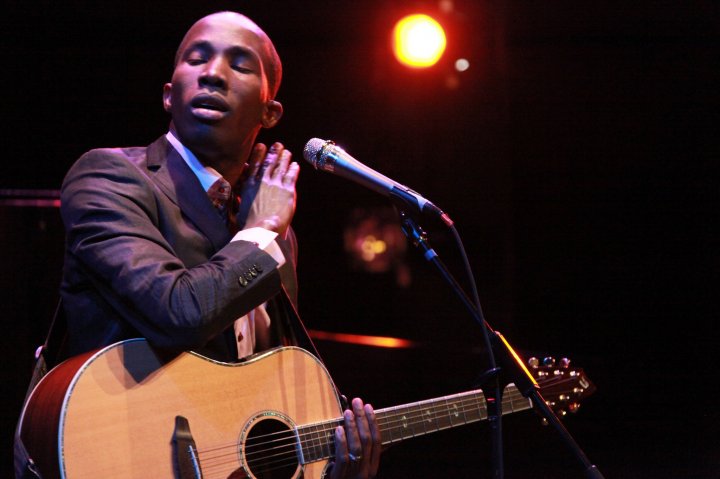
Belo: During a live performance at the FIAF

Belo has the momentum, and he is unstoppable!!! His EXPLOSION on the international arena is now happening, just about half a decade since he decided to take on this music career. There is nothing supernatural about his success, since most of us Haitians always try to give a supernatural explanation to anything that seems to surpass our limited intelligence or intellect.

His latest album REFERENCE, from what I could gather, was officially distributed in the United States by this distribution company called MI-5. I also found out that its promotion has been a success. This guy is not sleeping; he is on a mission. He on tour all over the world -Canada, the US, Algeria, France, Brazil, etc… -promoting the Haitian culture.

Belo is exposing our culture to the world community not because he is Jean Belony Murat, but because he has a product that is being marketed perfectly well. I had said it before, and I am going to say it again –marketing is everything. This is the discipline that can make or break your business, regardless how great your product is.

Let me explain to you how eminent marketing is for business success. Take two products –product A and product B. Product A is lousily manufactured but has a well-defined marketing strategy. Product B, on the other hand, is perfectly manufactured but has an awful marketing strategy. Product A has a greater chance than product B to make it in the market and be successful. That’s what marketing does. It has the ability to play in the psychology of the consumers to make them accept a product with initially no chance to make it.

I hope the people in the Konpa business can learn a thing or two from Belo as to what he is doing and how he is doing it. The man surrounds himself with skilled people, people who know what they are doing, how can you expect him not to breakthrough? Keep bathing in mediocrity and tell me how far it will get you. I have been telling you all along that mediocrity will not take us anywhere.

Most people in the Kompa business believe in the idiocy that our Kompa music cannot gain steam in the international market because of the language in which we sing; our Creole is the ultimate scapegoat. What a ridiculous argument!!!

I could have been making that same nonsensical argument had I not witnessed with my own naked eyes the impact of Raggamuffin music or Dancehall Reggae on both the South Korean and Japanese societies. Mind you, these societies are very conservative and reluctant when it comes to being receptive to foreign cultural tendencies.

During my time in the US Army, I had the privilege to be stationed for about two years in South Korea and Japan. When I and my friends would go to Korean- and Japanese-owned clubs outside the military installations, the Koreans and the Japanese, who may not even know anything about what Beenie Man and Buju Banton are saying in their songs, would just go crazy on the dance floor bouncing nonstop to the beats until the party is over. The young Koreans and Japanese would buy, sing and dance Ragga Muffin –a music that is not only culturally foreign to them but also sung in a language they cannot even come close to comprehend. So don’t tell me it is the language. There is something the Jamaicans have been doing that we are not doing. And I know what that is. It is called MARKETING. These guys know how to get their music out to the world.

Belo has been in this music business for not even a decade, yet he is taking the world market by storm. He is out there, folks. He is picking up steam and momentum. He is not singing in any language other than Creole for the most part, has that stopped him from being popular and going international? Has that stopped him from winning the RFI prize? The answer to both questions is… HELL NO!!!!!!!

It is not the language in which an artist sings that can make or break that artist; it is, rather, how well of a job they do in marketing their music. So stop blaming the Creole language for everything and anything that is not working with our music. The language is far from being the reason why our Konpa Direk cannot cross certain market boundaries.

We must not be producing music to cater to only the Haitian market, a market with only 8 million consumers. Our market is too narrow as it is, and the purchasing power of the consumers is already too minced. Any musician who aspires to make it big in this music business needs to go after other markets –for example, the American, the Asian and the European markets. Keep in mind that you don’t enter these markets with no preparation whatsoever to compete. If you do not sit down to do your homework prior to your entry, you are wasting your valuable time and resources. In these market environments, competition is fierce. Only the best survive.

Music is meant to be a lucrative endeavor; therefore, we must not be making music to be counting peanuts. Belo, be the Manuel of Jacques Roumain’s novel Gouverneur de la Rosee for our music so that you can show them how it’s done.